
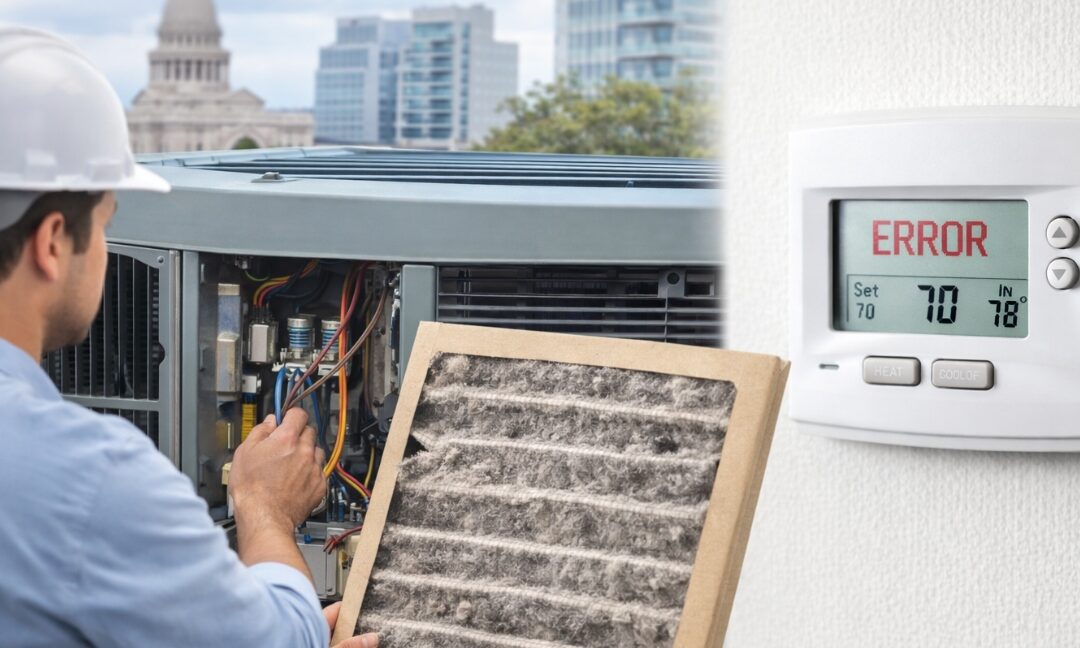
Austin homeowners rely heavily on their HVAC systems. With long, hot summers, sudden cold fronts, humidity swings, and seasonal allergens, heating and cooling systems work almost year-round. Because of this heavy demand, common HVAC problems tend to appear more frequently in Austin homes than in milder climates.
Understanding these problems early can help prevent breakdowns, reduce energy bills, and extend system lifespan. Below are the most common HVAC problems seen in Austin homes and practical ways to address them.
1. Dirty or Clogged Air Filters
One of the most common HVAC problems is a clogged air filter. Austin’s dust, pollen, and outdoor allergens quickly build up inside filters, restricting airflow.
Signs:
- Weak airflow
- Higher energy bills
- Rooms not cooling evenly
- Excess dust indoors
Fix:
Replace air filters every 30–60 days, especially during peak summer months. Homes with pets or allergy concerns may require more frequent changes.
2. Refrigerant Leaks
Refrigerant is essential for cooling performance. If levels drop due to leaks, the AC system cannot cool efficiently.
Signs:
- Warm air from vents
- Ice buildup on coils
- Longer cooling cycles
- Hissing sounds near the unit
Fix:
Refrigerant leaks require professional repair. Simply adding refrigerant is not a long-term solution—the leak must be located and sealed.
3. Thermostat Malfunctions
A malfunctioning thermostat is another one of the common HVAC problems affecting comfort in Austin homes.
Signs:
- AC won’t turn on or off
- Temperature readings seem inaccurate
- Frequent short cycling
Fix:
Check batteries, recalibrate the thermostat, or upgrade to a programmable or smart thermostat for better efficiency and control.
4. Clogged Drain Lines
Austin’s humidity causes condensation inside AC systems. If drain lines become clogged, water can back up into the system.
Signs:
- Water pooling near indoor unit
- Musty odors
- AC shutting down unexpectedly
Fix:
Clear drain lines regularly during maintenance visits. Annual inspections reduce moisture-related issues.
5. Dirty Coils
Evaporator and condenser coils accumulate dirt over time. When coils are dirty, heat transfer becomes inefficient.
Signs:
- System running longer than usual
- Rising energy bills
- Reduced cooling performance
Fix:
Professional coil cleaning restores efficiency and improves overall performance.
6. Electrical Component Failures
Extreme heat in Austin can stress electrical parts such as capacitors and contactors.
Signs:
- Clicking sounds
- AC fails to start
- Frequent breaker trips
Fix:
Electrical components should be inspected and replaced by a licensed technician. Preventive maintenance reduces the risk of sudden failures.
7. Frozen Evaporator Coils
Frozen coils are a common issue during peak summer when airflow is restricted.
Causes:
- Dirty filters
- Low refrigerant
- Blocked airflow
Fix:
Turn off the system and allow coils to thaw. Replace filters and schedule a system inspection if freezing continues.
8. Uneven Cooling Throughout the Home
Some Austin homeowners notice certain rooms remain warmer than others.
Causes:
- Duct leaks
- Poor insulation
- Blocked vents
- Improper system sizing
Fix:
Duct sealing, airflow adjustments, and proper insulation help improve temperature balance.
9. High Energy Bills
Rising utility bills are often a warning sign of underlying HVAC issues.
Common Causes:
- Dirty filters
- Aging components
- Poor maintenance
- Refrigerant issues
Fix:
Routine maintenance improves efficiency and reduces energy waste.
10. Aging HVAC Systems
In Austin’s climate, HVAC systems often experience wear faster than in cooler regions. Systems over 10–15 years old may begin to show consistent issues.
Signs:
- Frequent repairs
- Loud operation
- Decreased efficiency
- Inconsistent temperatures
Fix:
If repairs become frequent, evaluating system replacement may be more cost-effective long term.
How Austin’s Climate Contributes to HVAC Problems
Austin experiences:
- Prolonged summer heat
- High humidity
- Dust and pollen
- Sudden winter cold snaps
These conditions place continuous stress on heating and cooling systems. Regular servicing helps minimize breakdowns and improve reliability.
Preventing Common HVAC Problems
Preventive steps reduce the likelihood of system failure:
- Replace filters regularly
- Schedule seasonal tune-ups
- Keep outdoor units clear of debris
- Seal duct leaks
- Monitor thermostat performance
- Address unusual noises immediately
Proactive care prevents small issues from turning into costly repairs.
When to Call a Professional
While minor maintenance can be handled at home, many HVAC issues require professional expertise. Delaying repairs can worsen damage and increase costs.
For reliable assistance, homeowners often seek Top-Rated HVAC Repair in Austin to ensure problems are diagnosed correctly and resolved efficiently.
Final Thoughts
Because HVAC systems in Austin operate under demanding weather conditions, common HVAC problems are unavoidable without proper care. However, early detection, routine maintenance, and professional inspections can significantly reduce system strain and unexpected breakdowns.
Keeping heating and cooling systems in peak condition ensures consistent comfort, lower energy bills, and longer equipment lifespan. Regular service remains the most effective strategy for minimizing HVAC issues in Austin homes.